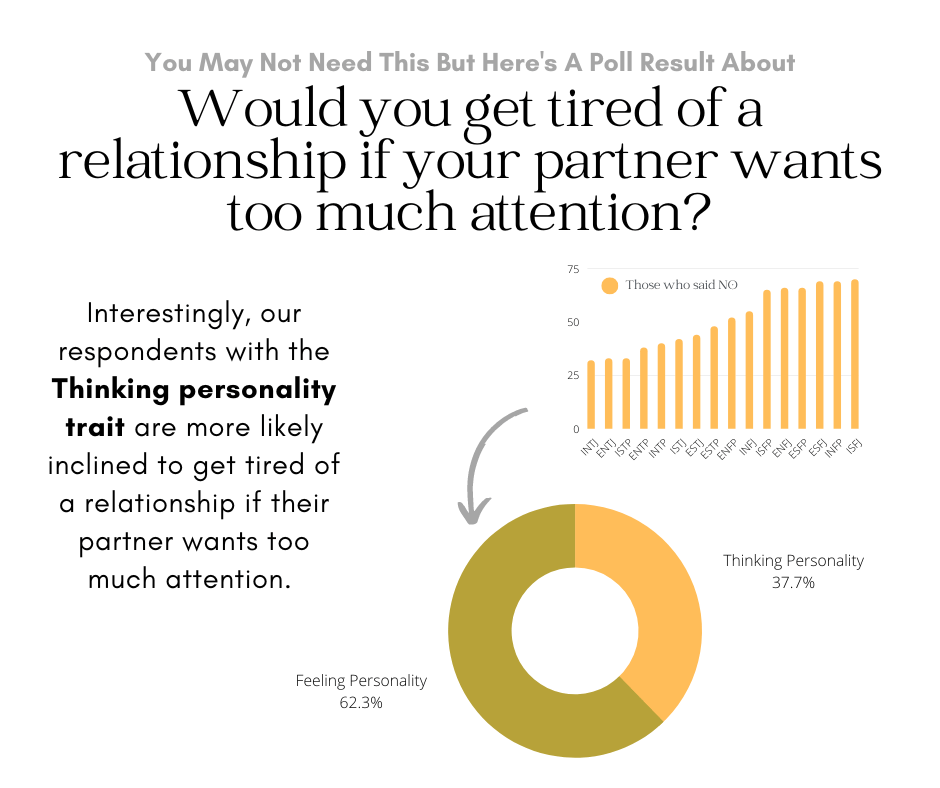
Before we discuss how much attention is normal in a relationship and the factors that may have been the reason for the lack or too much of it, let’s go first on the result of the quick poll that we had.
Question: Would you get tired of a relationship because your partner wants too much attention?
Result: % who said No
It’s normal to want to spend time with your partner and focus on them when you’re in a relationship. However, it’s important to maintain a balance between spending time together and having independent time for yourself.
It’s healthy to want to share your life with someone and be intimate with them, but it’s also important to have some space.
If you find that you’re constantly needing more attention than what your partner is able to give, it might be indicative of a larger issue. It could be that you’re not getting your needs met in the relationship, or there may be something else going on in your life that’s causing you to feel this way.
Factors that may cause a lack of attention in a relationship
Lack of attention in a relationship can be caused by a number of factors. One common reason is that couples simply don’t have enough time for each other. With work, kids, and all the other demands of life, it’s easy to let your relationship take a backseat. If you’re not making time for each other, it’s only natural that your connection will start to suffer.
Here are some of the factors that may be a reason for lack of attention in a relationship
Long-distance relationship
Having a different love language
Being culturally different
Another reason for lack of attention could be that you and your partner are going through a rough patch. Often times when couples are fighting or going through a difficult situation, they can become wrapped up in their own problems and stop paying as much attention to their partner. This can be especially tough if the problem feels like it’s out of your control, like if your partner is going through a tough time at work or dealing with a health issue.
If you’re not getting the attention you need from your partner, it’s important to communicate about it. Often, simply expressing how you feel can help to resolve the issue. However, it may be time to seek outside help if you find that you’re constantly asking for attention and not getting it, or if your partner is consistently neglecting your needs.
How to tell if attention is too little or too much
It’s normal to feel like you’re not getting enough attention from your partner at times. But if you find yourself feeling this way more often than not, it could be a sign that your relationship is lacking in terms of attention. There are a few key things to look for that can help you tell if this is the case.
One thing to pay attention to is how much quality time you spend together. If you’re spending more time apart than together, or if the time you do spend together isn’t very meaningful, it can be a sign that there’s a lack of attention in the relationship.
Another thing to consider is how much physical contact you have with each other. If you’re not physically affectionate with each other, it can also be a sign of a lack of attention.
Every relationship is different, so there’s no one answer to how much attention is needed. However, most experts agree that a healthy relationship should involve some level of communication and interaction daily.
This could mean anything from simply exchanging a few text messages or phone calls daily to spending time together in person. If you find that you’re not receiving any attention from your partner, it could be a sign that they’re no longer interested in the relationship.
On the other hand, if you feel like you’re being smothered with too much attention, it could be a sign that your partner is overly needy or possessive. If you’re unsure how much attention is normal in your relationship, it’s best to talk to your partner about it. This way, you can get on the same page and make sure both of you are happy with the level of interaction.
Signs that you are not given enough attention
One of the most common complaints in relationships is that one partner feels they are not receiving enough attention from their partner. But how much attention is normal in a relationship?
The answer may differ depending on the couple, but there are some general signs that your partner is not giving you enough attention. If you find yourself constantly vying for your partner’s attention or feeling like you are always the one initiating contact, it may be a sign that they are not giving you the attention you need.
Another sign that your partner is not giving you enough attention is if they are always busy with work or other commitments and don’t have time for you. If you feel like you are always taking a back seat to your partner’s other priorities, it can be a sign that they are not giving you the attention and focus you deserve.
If you feel neglected in your relationship, it is important to communicate with your partner about your needs.
Often, simply expressing how you feel can help resolve the issue. However, it may be time to reevaluate the relationship if you continue to feel neglected after communicating with your partner.
How to get more attention without seeming needy or desperate
In any relationship, it’s normal to want to feel close to your partner and receive attention from them. However, sometimes people can inadvertently come across as needy or desperate when seeking more attention from their partner. If you find yourself in this situation, there are a few things you can do to try to get the attention you crave without coming across as desperate.
First, take a step back and assess how much attention you are receiving from your partner. If you are getting less attention than you feel you need or want, then it may be time to discuss your needs with your partner. But be sure to approach the conversation non-threatening, as accusing your partner of not giving you enough attention will likely only make them defensive and less likely to want to give you the attention you desire.
Another approach is to find ways to get more attention from other people in your life outside of your partner. This can help take the pressure off them and make you feel more fulfilled overall. Finally, make sure that you are attending to your own needs and not just relying on your partner to meet all of them. This includes things like taking care of yourself emotionally, mentally, and physically. When you take care of yourself, you will be in a better position to receive the attention you desire from your partner.
What to do if too much attention is making you uncomfortable
It’s normal to want to feel loved and supported by your partner, but it’s important to ensure that you’re both comfortable with the amount of attention you’re receiving. If you’re finding that you’re getting too much attention from your partner and making you uncomfortable, there are a few things you can do.
Talk to your partner about how you’re feeling and explain that you need some space. You can also try spending more time with friends or family or doing things that make you feel good on your own.
It’s important to remember that everyone needs different amounts of attention, so don’t be afraid to speak up if you’re feeling overwhelmed. With a little communication, you and your partner can find a balance that works for both of you.
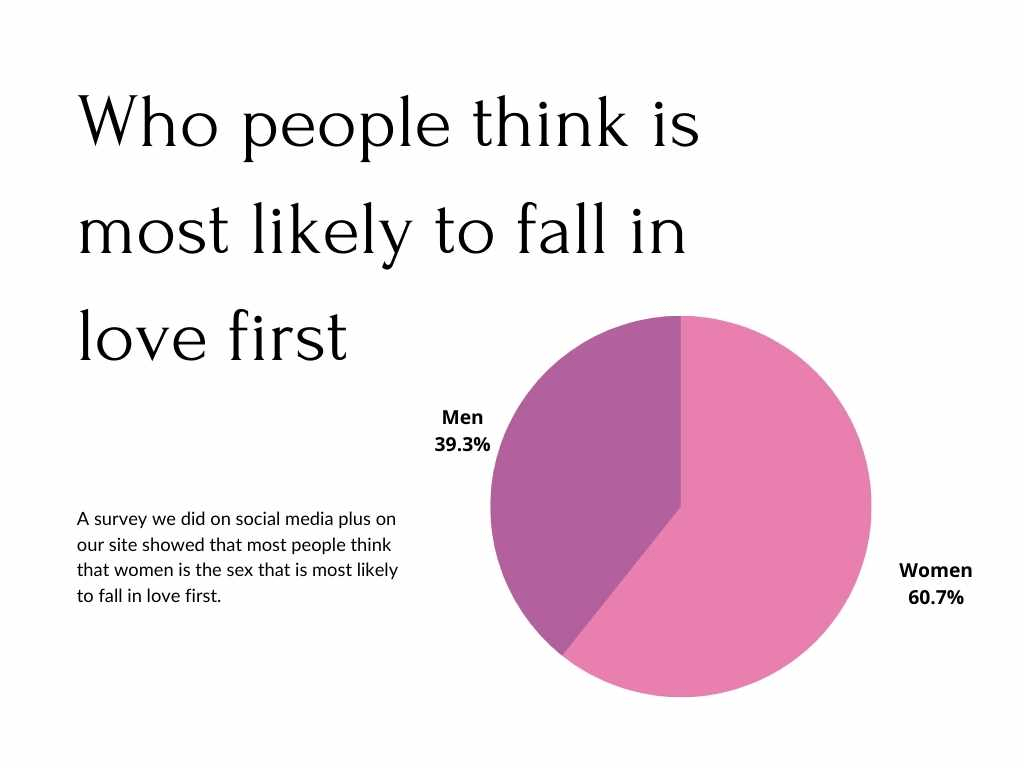
Love is a complex emotion; people can fall in love in different ways and at different speeds. We created a poll to know which sex people think is more likely to fall in love quicker. Here is the result of our poll:
The result of our poll showed that most respondents were inclined to think that women are more likely to fall in love first, but researches show that we need to look further into answering: how fast do men fall in love?
A study has found that men actually fall in love quicker than women, and the reason could be biological. The research found that men reported falling in love earlier than women and expressing that sentiment first. So what’s behind this difference? Let’s take a closer look.
How fast do men fall in love? – The Science Behind It All
Have you ever wondered why it seems like men can fall in love faster than women? While there are likely time frames for how long it takes men to fall in love, there are some common factors that can influence how quick they are to open up their hearts.
For example, how much they trust and connect with the other person, how much they have in common, and how physically attracted they are to them all play a role in how fast men fall in love. Let’s take a closer look at the science behind it all.
But how fast do men fall in love? Is there an exact timeframe? Interestingly, there is…
Men Fall In Love Faster Than Women, Say Researchers
Men are more likely than women to “confess love” initially, according to a collection of studies released by the American Psychological Association in 2011. Men claimed to have thought about “confessing love” in 97 days, but it took women, on average, roughly 139 days. These results refute the notion that women are more emotional and dependent than males.
What the Studies Found
The general consensus among studies on love is that men fall in love faster than women. In the 2011 study by the American Psychological Association, researchers found that men thought about confessing love six weeks earlier, on average than women. This difference may be due to evolutionary factors, as some experts believe that men are programmed to spread their seed as far and wide as possible in order to increase their chances of passing on their genes.
On the other hand, women may be programmed to be more selective when choosing a partner because they have a greater investment in child-rearing and want to choose a partner who will stick around to help raise the child. This theory would explain why it takes women longer to fall in love; they want to make sure they’re picking the right partner before getting emotionally invested.
How does this play out in real life?
If you’ve ever been head-over-heels for someone only to have them tell you they just want to be friends, you know how it feels when you’re affected differently than intended by these evolutionary differences. But if you’re the one doing the Friend Zoning, understanding why can help ease the sting—after all, it’s not personal, it’s just biology.
While there’s no hard and fast rule about who falls in love faster, the available evidence suggests that men are more likely than women to confess their love first. This difference may be due to evolutionary factors; some experts believe that men are programmed to spread their seed as far and wide as possible while women may be programmed to be more selective when choosing a partner.
Understanding these differences can help prevent hurt feelings on both sides when one person is ready for commitment but the other isn’t.
In Heterosexual and LGBTQIA+ relationships
We’ve all heard the stories of love at first sight. A couple sees each other across a crowded room, their eyes meet, and they just know that they’re meant to be together. But is love at first sight really a thing? According to some studies, it might be. But there’s also a pretty big difference between how quickly men and women fall in love. Here’s what the science has to say about it.
According to a 2013 survey by YouGov and dating site eHarmony, the average time it takes for men to fall in love is 88 days. For women, those same feelings of true love take 134 days. That’s almost two months longer! A separate survey by Elite Singles found that 61 percent of women believe in love at first sight, while 72 percent of men do. So what gives?
Well, according to psychologist Dr. John Gottman, men are more likely to bond with someone based on sexual attraction, while women are more likely to bond based on feelings of intimacy. This could explain why men are more likely to say “I love you” early on in a relationship (before sex even happens), while women tend to wait until they’ve established a deeper emotional connection before saying those three little words.
But it’s not just heterosexual relationships that have been studied when it comes to how quickly people fall in love. A 2000 study of 38 lesbians found that, on average, they declared their love or commitment to a partner after six months. And a Match.com poll done in 2013 found that 65 percent of gay men believe in love at first sight, while 60 percent of lesbians do. So it’s not just straight relationships where there’s a discrepancy between how quickly men and women fall in love; this appears to be a trend across the board.
So why does all this matter? I think it’s important to understand the psychology behind why we fall in love the way we do because it can help us be more patient with ourselves and our partners. If you’re someone who falls in love quickly, try not to put too much pressure on yourself or your partner to say “I love you” within a certain timeframe; everyone falls at their own pace.
And if you’re someone who takes longer to fall in love, don’t worry; there’s nothing wrong with you, either. Just enjoy the ride and let yourself bond with your partner in whatever way feels right for you.
Can you fall in love with someone you just met?
Have you ever met someone and felt an instant connection? Maybe you felt like you’d known them your whole life, or like you were meant to meet them. Some people might call it to love at first sight, but is that really a thing? Can you fall in love with someone you just met?
As it turns out, the answer may be yes—but not necessarily in the way you think. While you can’t exactly fall in love with someone the instant you meet them, there is something to be said about the idea of love at first sight. Here’s why.
When you meet someone for the first time, your brain releases a cocktail of chemicals, including dopamine, oxytocin, and adrenaline. This mixture of chemicals normally happens when we’re attracted to someone—you know, that giddy feeling you get when your crush walks into the room or texts you back. It’s sometimes called “limerence,” and it can be a powerful force.
But what if that feeling doesn’t go away after a few days or weeks? What if it only gets stronger over time? That’s when it might turn into something more like true love. limerence often fades after a little while when we get to know someone better and realize they’re not quite as perfect as we thought they were—but if this process happens slowly enough, our feelings could turn into deeper attachment and true love instead.
However it happens, falling in love is a beautiful thing. It can make us feel happier, more connected, and more fulfilled than anything else—and even though scientists can’t quite explain how or why it happens, that doesn’t make it any less real.
Whether or not you believe in love at first sight, there’s no denying that meeting someone special can feel pretty magical. So even though there may not be such a thing as love at first sight in the traditional sense, that doesn’t mean those intense feelings of attraction and connection aren’t real—or worth exploring further. Who knows? The person you just met might just turn out to be your soulmate after all.
Research: “Who Really Feels It and Says It First?”
The study, which was conducted by Harrison & Shortall (2011), entitled, Women and Men in Love: Who Really Feels It and Says It First? in The Journal of Social Psychology. They evaluated 172 responses from college students.
Results:
Women are perceived to be the first to fall in love. A woman is likely to fall in love first in a relationship, according to almost 9 out of 10 persons who have experienced relationships.
Men were most likely to proclaim their love first. 7 out of 10 participants thought that a woman will initiate the “I love you” statement. However, the data revealed that men claimed to fall in love earlier and that three times as many men as women stated, “I love you,” to their spouses initially.
These new results are consistent with older studies. These findings were in line with other research that mentioned men declaring their feelings for women first. This implies that, contrary to popular belief, women are typically more practical when it comes to finding true love.
So why are men quicker to say ‘I love you’? One possibility is that women are biologically predisposed to be pickier when selecting a partner. Because being pregnant is such a huge commitment, the author thinks that women may subconsciously postpone love to ensure their partner is suitable to have children with. Of course, not all women want children, and not all relationships lead to them.
There are many possible explanations for this difference.
Some researchers suggest that it may be because men are more visual creatures than women and that they tend to fall in love with their partners based on looks alone.
Others suggest that it may be because men are more likely to express their feelings openly than women are and that they become emotionally attached to their partners more quickly as a result.
A more possible biological reason may be that women are predisposed to being more selective when choosing a partner because they need more time for consideration especially when they also have to consider the additional responsibility of procreation. So it makes sense that women would take their precious time into account before committing fully to having a child with someone else- especially if not all relationships lead toward having children!
One of the authors of the study posited that the reason men fall in love faster than women could be gender roles at work, with men attempting to fulfill the expectation that they take a leadership role in a relationship. This theory makes sense when you think about it; after all, we do live in a society where traditional gender roles are still very much alive and well.
Whatever the reason, it seems clear that men do tend to fall in love faster than women. So if you’re wondering how long your man will take to fall for you, the answer may be shorter than you think!
Men tend to say ‘I love you’ first
Studies have shown that men are more likely than women to confess love first in a relationship. This is especially true when the ratio of men to women is more uneven (meaning there are more men than women).
However, this research also suggests that how people feel about hearing someone say “I love you” depends on their attachment style. People who are less avoidant of relationships are happier to hear “I love you”, while those who are more avoidant are less happy.
Stages of Love for a Man
When most people think of love, they think of a woman. But what about men? How do they fall in love?
What are the stages of love for a man? And how can you tell if he’s in love with you? In this blog post, we’ll explore all these questions and more. So read on to learn more about how men fall in love!
To start, here are the stages of love for a man:
1. The Attraction Stage
In this stage, a man is physically drawn to a woman and begins to pursue her. This is the “honeymoon” phase where he’s infatuated with her and wants to be around her all the time.
He may feel like he can’t get enough of her, and want to spend every waking moment with her. This phase doesn’t last forever, but it’s a fun and exciting time while it does.
2. The Liking Stage
In this stage, a man begins to like a woman more and more. He admires her and is attracted to her mind and personality. He is attracted to her intellect and finds himself drawn to her unique worldview.
He enjoys spending time with her, learning new things, and sharing common interests. Over time, he comes to appreciate her even more as a person and values her opinion and company highly. He may even start to fall in love with her at this stage.
3. The Courtship Stage
In this stage, a man courts a woman he loves. He pursues her, woos her, and showers her with gifts and compliments. In this stage, a man begins to actively pursue a woman he loves.
He may take her on dates, send her flowers, or try to spend time with her in order to get to know her better. He is trying to woo her and may even declare his love for her. He may even propose to her at this stage.
4. The Marriage Stage / Civil Union
In this stage, a man is married/cohabiting with the woman he loves. He is committed to her and they start a life together. This is a time of stability and happiness for many couples.
However, it can also be a time of boredom and routine. If couples are not careful, they may find themselves in a rut.
5. The Family Stage
In this stage, a man becomes a father and his wife becomes a mother. They raise their children together and love them unconditionally. This is the final stage of love for a man.
This is a time of great change for both parents as they adapt to their new roles. For the father, it may be the first time he has ever been responsible for another human being. The mother must learn to care for her new baby, both physically and emotionally. This can be a difficult and demanding time for both parents, but it is also a time of great joy and satisfaction.
While the ways men and women fall in love may seem similar, there are actually a few key differences. For one, men are much more likely to fall in love at first sight than women.
In one study, the majority of men reported feeling the love at first sight, compared to women. This may be because men are more visual when it comes to attraction, and so they are more easily drawn in by physical appearance. But while men are most likely to feel love at first sight, it does say anything about it being translated into committed relationships.
Another key difference is that men tend to fall in love with someone who meets their ideal partner criteria, while women are more likely to fall in love with someone who is similar to them in terms of personality and values. This is likely because women place a higher value on connection and intimacy, while men place a higher value on physical attraction. Understanding these differences can help us to understand how men fall in love.
6 Signs a Man is Falling in Love with a Woman
When it comes to love, what really goes on inside the male mind? Do men and women fall in love differently?
According to psychologists, the answer is yes. So, what are the signs that a man is falling in love with a woman?
Here’s a look at the science behind love and some of the telltale signs that he’s head over heels.
He’s always around.
One of the early signs that a man is falling in love with a woman is that he starts to spend more time with her. He wants to be around her as much as possible and may even rearrange his schedule just so he can see her more often.
This stems from a deep-rooted desire to protect and defend his mate. After all, if he’s not around, he can’t keep an eye on her and make sure she’s safe!
He’s attentive.
Another sign that a man is falling in love with a woman is that he’s incredibly attentive to her needs. He hung on her every word, eagerly waiting to see if there was anything he can do to help her out.
He remembers the little things—like how she likes her coffee or what kind of shampoo she uses—because they matter to him. This may seem like common courtesy, but it’s actually another sign of his underlying need to protect and care for his partner.
He’s protective.
A man who is falling in love with a woman will also go out of his way to protect her—both emotionally and physically. He’ll put himself in harm’s way before he lets anything happen to her.
He’ll also work to shield her from anything that might upset or hurt her emotionally. This may manifest itself as him trying to keep arguments or disagreements from escalating or shielding her from bad news (like the results of the election).
He’s selfless.
When a man is falling in love with a woman, he’ll start making more selfless decisions—even if they’re not always convenient for him. For example, he might pass up a chance to go out with his buddies so he can stay home and help her study for finals instead.
Or, he might volunteer for an extra shift at work so she can have the day off. These selfless acts are his way of showing her how much she means to him and how much he wants to make things work for both of them—not just himself.
He’s patient.
Another sign that a man is falling in love with a woman is that he becomes incredibly patient with her—even when she’s being frustrating or difficult.
Instead of getting angry or upset, he’ll calmly try to talk through whatever issue she’s having—because all he wants is for her to be happy (even if it means putting up with some inconvenience on his part).
So, there you have it! Six signs that your man may be falling in love with you, courtesy of science! Of course, every relationship is different, so take these findings with a grain of salt. But if your guy exhibits several of these behaviors, it may be worth paying attention because chances are good that he’s head over heels for you!
These are just a few signs that a man might be falling in love with a woman but remember, everyone, expresses love differently so don’t take this list as gospel. The best way to know how someone feels about you is to ask them directly!
However, if they start exhibiting any (or all !) Of these behaviors, it could mean they’re ready to rock your world.
Do men fall in love in your absence?
The age-old question of why we do the things we do when it comes to love has baffled us for centuries. Is it mere coincidence, or is there some underlying science behind it? When it comes to guys falling in love when they miss you, evolutionary psychology may have the answer.
Have you ever noticed how guys always seem to come back around after you’ve given them some space? Or how they seem to fall even more in love with you when you’re not always available? There’s a scientific reason for this phenomenon. Here’s a look at the psychology of why men fall in love when they miss you.
Men are motivated to pursue from an evolutionary perspective.
One theory as to why men fall in love when they miss you is from an evolutionary perspective. Historically, it was important for men to pursue and capture mates because of the risk of other males taking them away.
This meant that women didn’t have to do much except sit back and wait to be chosen. The ancient need to procreate and ensure that their offspring survived. For their genes to continue living on, men needed to be relentless in their pursuit of women.
This innate quality hasn’t changed much in the present day; although we no longer need to worry about our offspring’s the desire to pursue is still hardwired into our DNA.
The Primal Instinct Theory
The primal instinct theory can relate to the part why a man is tapped into his more primal self when he falls in love. It’s possible that the ancient man who is focused on survival and reproduction is tapped into whenever they meet a mate.
In the animal kingdom, it’s the alpha male who leads the pack and gets first dibs on the females. While we like to think that we’ve evolved beyond this kind of thinking, the reality is that we haven’t.
It’s just that now, instead of physically fighting for a mate, they fight for attention and affection by trying to be the best possible version of themselves.
The Need for Approval Trait
Another theory as to why men fall in love when they miss you is a trait that is more common in men than women call the “need for approval”. Whether this is due to low self-esteem or just a deep-seated need for validation, men often seek out relationships as a way to feel good about themselves.
When they don’t have your attention, they feel as though they are losing your approval and this drives them to want you even more.
In some cases, this can manifest as needy or clingy behavior; but in others, it may simply manifest as an overwhelming desire to win you over and make you feel special. Do you buy into either of these? Or do you think there’s something else entirely at play? Let us know your thoughts in the comments below!
Guys are drawn to challenges.
If you’re wondering why men seem to always be chasing after women who play hard to get, you’re not alone. It often seems like an unfair game; why does it appear that the more unavailable a woman is, the more interested a man becomes?
Men are often drawn to challenges, and if a woman is always available, she might be perceived as being too easy to get or even desperate. On the other hand, if she’s not too available, she comes across as being more desirable and sought-after, he’ll be more attracted to her and feel more compelled to pursue her.
This creates a greater sense of attraction because he has to work harder to win her over. In short, guys fall in love when they miss you because they appreciate the chase.
Why Men Feel Uncomfortable with the Unpredictable
One theory is that it has to do with the fact that men are “fixers.” They like to feel in control and be able to foresee what will happen next. When things are going well, they want to keep it that way. But it can be very unsettling when they feel out of control or like they don’t know what’s going to happen.
In other words, if a man feels sexually attracted to a woman, he’s more likely to believe that they could have a successful relationship together—even if she doesn’t necessarily check all of his boxes for an ideal partner.
This is one reason why men are often more open than women to having short-term flings or one-night stands; from a purely biological perspective, sex is just sex for men (although obviously this isn’t always the case).
However, this doesn’t mean that men don’t care about finding a compatible partner; it just takes them longer to decide if a woman meets all of their criteria for a long-term relationship.
In fact, one study found that while most women know within the first few dates whether or not they want something long-term with a guy, it takes men an average of 114 dates before they’re ready to make that same commitment!
So there you have it! The next time you’re wondering why he hasn’t called after your third date or why she’s playing coy instead of outright telling you that she likes you back, remember that there’s actually some science behind it all. Men (and people in general) tend to be drawn toward others who make them feel good; it’s just human nature.
And sometimes playing hard-to-get can actually create more attraction because it taps into those primal chase instincts. So if you’re looking for Mr./Mrs. Right and getting frustrated with all the frogs along the way, take heart knowing that eventually your prince/princess will come—and he or she will probably appreciate you all the more for making them work for it!
Men feel uneasy about things they cannot control.
It’s no secret that men and women are different when it comes to handling uncertainty. Women are often lauded for their ability to go with the flow, while men are typically associated with needing things to be more black-and-white. But why is this? Why do men tend to feel uneasy about things that are unpredictable?
This need for control can also extend to relationships. When a man is dating a woman, he wants things to be going smoothly. If there are any hiccups along the way, it can make him start to worry that ev
Why Men Feel Uncomfortable with the Unpredictable
Of course, this isn’t true for all men. Some are perfectly comfortable with uncertainty and embrace it as part of life. But for many men, feeling uncomfortable with the unpredictable is simply part of who they are.
So why do men feel uneasy about things that are unpredictable? It could be because they like to feel in control or because they’re fixers who want to keep everything going smoothly. Whatever the reason, it’s important to remember that not all men feel this way and that everyone handles uncertainty differently.
Fear of loss motivates men to take action.
If a man senses that he might lose you, he’ll be more inclined to take steps to keep you in his life. He’ll want to spend more time with you and make an effort to win your affection. In short, guys fall in love when they miss you because they realize they might lose you and their feelings propel them to seek more.
While some guys might fall in love when they miss you because they appreciate the challenge, others might do it out of pure fear of losing you entirely. This can especially be the case if he’s worried that another guy might sweep you off your feet while he’s not around.
To prevent this from happening, he’s likely to declare his undying love for you in an attempt to keep you close by and prevent anyone else from coming between you two.
His emotions propel him to seek more.
Sometimes, a guy might fall in love with you simply because he’s feeling all sorts of emotions and wants more. He might be feeling happy, loved, supported, and secure when he’s with you and then experience feelings of sadness and loneliness when you’re not around. These intense emotions can lead him to seek out your company so that he can feel good again.
So there you have it—the underlying reasons why guys fall in love when they miss you explained by science! Although it might not seem romantic at first glance, knowing that your guy is falling for you because of primal instincts can be pretty empowering. The next time you find yourself wondering why he’s acting a certain way, just remember that there’s probably an evolutionary reason behind it!
Reasons Why Men May Seem To Fall In Love Faster
If you’ve ever been in a relationship with a man who seems to be head-over-heels in love with you before you even really know him that well, you may have found yourself wondering why men seem to fall in love so much faster than women.
As it turns out, there are scientific reasons for this phenomenon.
How Attraction Influences Love
Studies show that men are more likely than women to base their attraction on physical appearance, and this is likely because evolutionarily speaking, men are looking for partners who can bear healthy children. So, if you’re wondering why that guy you just met seemed to be already head-over-heels for you, now you know!
Attraction is based on a number of factors, both physical and non-physical. Physical factors include things like clear skin, bright eyes, and a symmetrical face—all indicators of good health. Non-physical factors include things like intelligence, humor, and personality. While both men and women say that personality is important in a partner, studies show that men place more importance on physical attractiveness than women do.
In one study, researchers showed participants photos of potential partners and asked them to rate each person’s physical attractiveness. They also asked participants how much they liked the person’s personality. The results showed that men were more influenced by physical attractiveness when it came to liking someone, while women were more influenced by personality.
This difference is likely due to evolutionary pressures. Historically speaking, men have been looking for partners who can bear healthy children—and physical attractiveness is an indication of good health. Therefore, men are subconsciously drawn to women who exhibit signs of good health through their physical appearance.
So, what does this research mean for those of us who are looking for love? Well, it’s important to remember that not all men are the same. While some may be more superficial than others, there are plenty of men out there who place more importance on personality and emotional connection than on physical appearance. The key is to get to know your partner and figure out what’s important to them.
If they seem to be more interested in your looks than in getting to know you as a person, then they might not be the right match for you. But if they’re interested in getting to know you as a person and they’re attracted to you physically as well, then you might have found yourself a keeper!
Now that you know the reasons behind this phenomenon, remember that not all men are the same. There are plenty of great guys out there who will take the time to get to know you before rushing into anything serious. And when it comes to finding Mr. Right, slow and steady definitely wins the race!
How Emotionality Influences Love
For years, we’ve been told that men are from Mars and women are from Venus. This age-old adage suggests that the two genders are so different that they might as well be from different planets. And while there are certainly some differences between men and women, when it comes to love, the two genders may not be as different as we’ve been led to believe. In fact, according to science, men may actually fall in love faster than women. Here’s a look at the science behind it all.
One reason men may seem to fall in love faster is that they experience what has been called “limbic resonance.” This refers to the fact that when men feel intense emotions such as love, their bodies physically react as if they are under stress. These physical reactions include an increase in heart rate and blood pressure as well as cortisol, the stress hormone.
In a study, researchers found that when men were shown photos of their romantic partners, their cortisol levels increased. However, when shown photos of attractive strangers, their cortisol levels did not increase. This suggests that when men see their romantic partners, they experience a physical reaction that is similar to what they would experience if they were under stress.
While limbic resonance may cause men to fall in love faster, it can also lead them to fall out of love just as quickly. Limbic resonance is thought to be triggered by novelty and excitement; when the novelty wears off and the excitement fades, so too does the limbic resonance. This is one reason why many relationships tend to fizzle out after the initial infatuation stage; once the initial excitement wears off, couples often find that they have little in common and little to keep them together.
Does this mean that all men fall in love quickly and all women fall in love slowly? Of course not. But it does suggest that there may be some truth to the old adage that “men are from Mars and women are from Venus.” After all, when it comes to love, we may not be as different as we think.
How Men Fall In Love: Hidden Signs A Man Is Falling In Love With You
When it comes to love, men can be complex creatures. They may not always wear their heart on their sleeve, but there are definitely some telltale signs that a man is falling in love. If you’re wondering whether the guy you’re dating is starting to develop strong feelings for you, pay attention to these hidden signs!
He’ll start to be more attentive and make an effort to spend time with you.
This intently focused attention is a to show that he’s attracted to you. It’s his way of trying to create a bond.
If he’s always making sure to text you back right away or planning fun dates, it’s likely that he’s starting to develop feelings for you.
He’ll want to know everything about you and will be interested in your life
A man who is interested in you will want to know all about your life, from your hopes and dreams to your fears and insecurities. He’ll want to be a part of your life and will take an interest in the things that matter to you. He will want to understand what makes you happy, what makes you sad, and what motivates you. By learning about you, he can get a better sense of who you are as a person, and whether or not you are compatible.
He’ll become more protective of you and may even start to show signs of jealousy.
He may start to show signs of jealousy, even if he wasn’t previously the jealous type. This is because he is worried about losing the woman he loves and will do anything to keep her by his side.
This is because he cares about the wellbeing of his partner and wants to ensure that she is safe and happy. This display of interest and concern is actually a positive sign, showing that the man is invested in the relationship.
However, make sure that they don’t cross the line to being possessive.
He’ll be more generous with compliments and will often tell you how lucky he feels to have you in his life
Men often express their love differently than women. For example, men tend to be more generous with compliments and may tell you how lucky he feels to have you in his life.
Men tend to be more generous with compliments than women. They may tell you how lucky he feel, how great you look, or how much they enjoy your company. All of these things make men feel good about themselves and their relationship with you.
His body language will change around you – he’ll seem more relaxed and open
A man’s body language is a great indicator of his interest level. If you notice that he seems more relaxed and open around you, it’s a good sign that he’s attracted to you. This is because men are attracted to women who make them feel comfortable. They feel like they can be themselves around you and don’t have to put on a show.
When a man is interested in a woman, he’ll also make sure to have plenty of eye contact and will find excuses to touch her. So if you’re wondering whether or not a guy likes you, pay attention to his body language. It can give you some valuable clues.
If he’s been distant or closed off, he may suddenly become very affectionate towards you
He may start touching her more, leaning in close when they talk, making lots of eye contact, or even flirting with her. Of course, not all men will behave in exactly the same way when they’re attracted to someone, but these sorts of changes in behavior are often a good indication that a man is interested.
He’ll start making an effort to impress you
He will go out of his way to do things for you, whether it’s picking up your favorite coffee drink on the way to work or surprising you with tickets to a show. He wants to make sure you see him as a potential partner, and not just someone who is interested in being friends.
This can be a great way to gauge his level of interest, but it’s important to keep in mind that not all men are the same. Some men may not feel the need to impress you and may instead try to get to know you on a more personal level. Either way, if he’s making an effort, it’s a good sign that he’s attracted to you.
Our Takeaways
So, what have we learned? Men do fall in love faster than women – but this isn’t always the case. It largely depends on the individual and their unique biology and psychology.
There is no right or wrong way to fall in love – it just happens. We have to take these studies with a grain of salt while they are all interesting, not all of them present replicable and reliable set-ups. While there is yet no real/proven time frame for how long it takes men to fall in love, there are some common factors that can influence how quick they are to open up their hearts.
For example, how much they trust and connect with the other person, how much they have in common, and how physically attracted they are to them all play a role in how fast men fall in love.
There are a number of signs that can indicate whether or not a man is falling in love with you, but it’s important to remember that these vary from person to person. If you want to know for sure how your guy feels, ask him!
Guys often miss the cues that they’re giving off when they fall in love, so don’t be afraid to speak up. And finally, even if men do fall in love faster than women on average, it doesn’t mean that he won’t care about and adore you just as much as any woman would.
RELATED QUESTIONS:
Can you fall in love in a week? How Long It Takes To Fall In Love
Love is one of the most powerful emotions we experience as human beings. It can make us feel elated, broken-hearted, happy, and sad all at the same time. While love is often associated with happy Hollywood endings and fairytale romances, the reality is that love isn’t always so simple. So, how long does it take to fall in love?
According to a study conducted by psychologist Zick Rubin, it takes around 90 seconds for people to decide if they’re attracted to someone else. From there, it takes anywhere from three to six months for those initial feelings of attraction to blossom into full-blown love. However, this timeline is just an average; some people fall in love more quickly than others, and some may never experience love.
A few factors can influence how long it takes to fall in love. For example, age plays a role; teenagers are more likely to fall in love quickly and impulsively, while adults tend to be more cautious and take their time getting to know someone before they declare their love. Additionally, our past experiences can also affect how we experience love. If you’ve been hurt in the past or have trust issues, you may have a harder time opening up and letting yourself fall head over heels.
So, how long does it take to fall in love? There’s no definite answer, but typically it takes anywhere from three to six months for those initial feelings of attraction to blossom into true love. However, this timeline is just an average; some people fall in love more quickly than others, and some may never experience love at all. Factors like age and past experiences can play a role in how quickly or slowly someone falls in love.
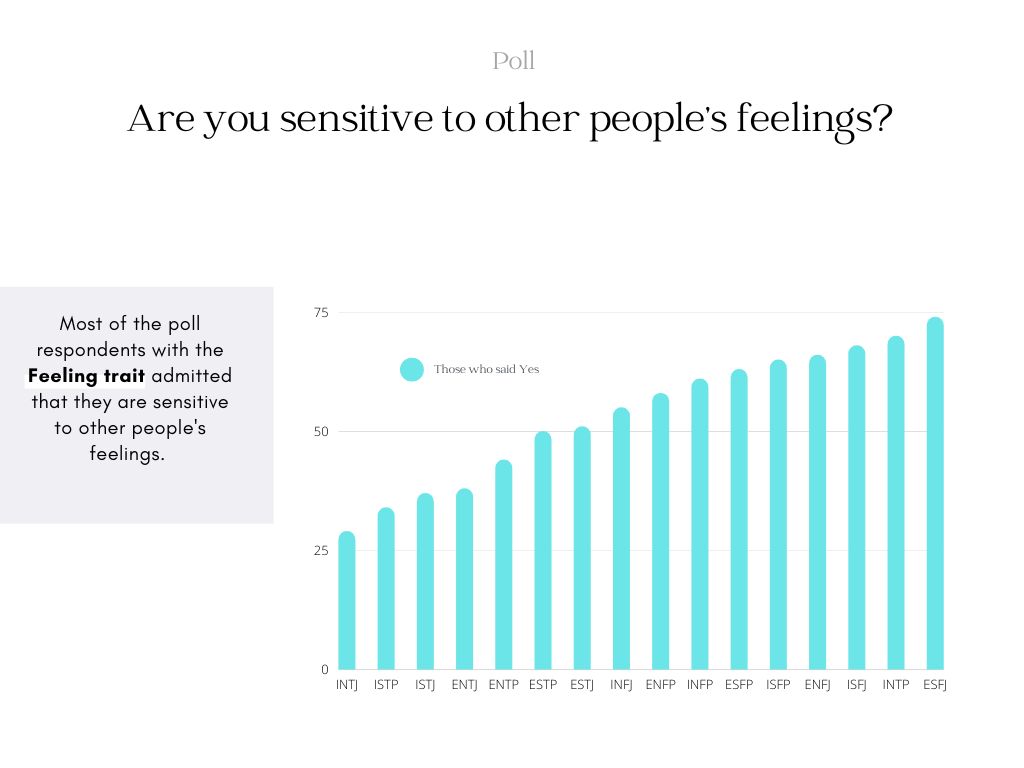
If you’re trying to find out how lack of empathy affects relationships, let’s first go over our poll about being sensitive to other people’s feelings.
Question: Are you sensitive to other people’s feelings?
Interestingly, our respondents with the Feeling personality trait are more sensitive to other people’s feelings
Being sensitive to other people’s feelings can be related to their empathy skill.
How lack of empathy affects relationships
A lack of empathy is one of the most common issues in relationships.
Lack of empathy is one of the most common problems in relationships. It can lead to misunderstanding, conflict, and even resentment. Additionally, a lack of empathy can lead to resentment and feeling undervalued in a relationship.
You know that feeling you get when you just can’t seem to put yourself in your partner’s shoes? When don’t you understand how they could feel the way they do? You’re not alone.
Empathy in relationships is about being able to see things from their perspective, and it’s essential for healthy communication and relationships. Without empathy, building trust and creating a meaningful connection with your partner is difficult.
Additionally, a lack of empathy can make maintaining intimacy and closeness in a relationship difficult. If you’re unable to empathize with your partner, chances are you’re not understanding or connecting with them on a deep level.
Ultimately, this lack of connection can lead to feelings of distance and dissatisfaction in the relationship.
What is Empathy?
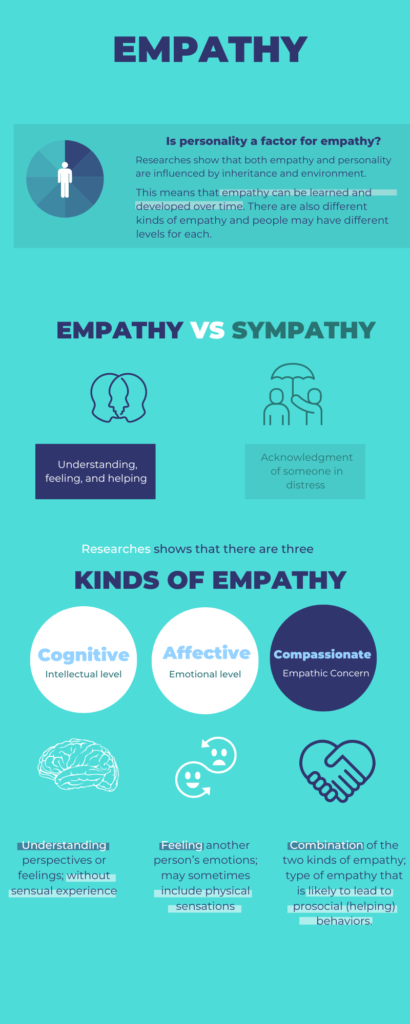
Empathy is the ability to understand and share the feelings of another person. It is an important part of emotional intelligence and essential for healthy communication, especially as a part of romantic relationships.
When we lack empathy in relationships, we are more likely to misunderstand or misinterpret what someone is saying. We may also struggle to see things from their perspective, which can lead to conflict and damage relationships.
Sympathy is acknowledging that another person is going through struggles. Empathy, on the other hand, is about understanding someone else’s experience, sharing their feelings, and sometimes even helping out with what they are going through.
Kinds of Empathy
There are three different types of empathy that we can display in our everyday lives. They are:
1. Cognitive empathy
This is when we can understand how another person feels and why they might feel that way. We can “put ourselves in their shoes,” so to speak.
2. Emotional empathy
This is when we share the emotions that another person is experiencing. We feel what they are feeling.
3. Compassionate empathy
This is when we not only understand and feel another person’s emotions but also want to do something to help relieve their suffering in some way. Compassionate empathy is often referred to as “altruistic” empathy.
Cognitive empathy is the most common type of empathy, and it is the kind of empathy that is most important in relationships. Emotional empathy can sometimes be helpful in relationships, but it can also lead to problems if we are not careful.
For example, feeling too much of another person’s pain can be overwhelming and lead to burnout. Compassionate empathy is less common, but it can be beneficial in times of crisis or when someone is going through a difficult time.
What causes a lack of empathy?
There can be many different causes for lack of empathy. It could be due to various factors, including genetics, brain damage, or early life experiences.
For some people, it might be that they simply haven’t had any experiences that have led them to develop empathy. Others might have chemical imbalances or other mental health conditions that make it difficult for them to empathize with others. And still, others might just be naturally more self-centered and focused on their own needs and emotions.
Whatever the cause, a lack of empathy can make it very difficult to connect with other people and lead to social isolation and conflict.
How to Develop Empathy
If you find that you struggle with empathy, don’t fret! It is a skill that you can learn with time and practice. Here are some tips for how to develop empathy:
1. Pay attention to your own emotions
One of the best ways to understand the feelings of others is to first understand your own emotions first. Pay attention to what you are feeling and why you are feeling it. This will help you to be more aware of the emotions of others.
For example, at one point you may realize that the anger you are feeling is actually frustration, by having a deeper probe into your emotions you can start to understand that just how people react to situations is not the actual extent of what they are feeling.
2. Try to see things from other people’s perspectives
When talking to someone, try to imagine how they might feel. What is going on in their life that might be causing them to feel this way? What might they be thinking and feeling?
3. Listen more than you talk
Many of us want to jump in and offer advice when someone is going through a tough time. But often, people just want to be heard and understood. So, instead of giving advice, try just listening and being there for the person.
4. Practice compassion
When you see someone suffering, practice wishing them well and sending them positive thoughts. You can also try to help out in practical ways if you are able to.
5. Seek out opportunities to practice empathy
There are many opportunities to practice empathy in our everyday lives. If you make an effort to be more aware of them, you will find that you can better empathize with others.
A lack of empathy can be a barrier to forming and maintaining relationships. But with a little effort, you can learn how to develop empathy and use it to improve your relationships.
Can you be in a relationship with someone who lacks empathy?
Yes, you can be in a relationship with someone who lacks empathy. However, this type of relationship is likely to be dysfunctional and emotionally draining.
People who lack empathy do not understand or feel the emotions of others. They are often unable to put themselves in other people’s shoes, which makes it difficult for them to empathize with others. As a result, they may not be very good at providing emotional support or showing compassion.
If you are in a relationship with someone who lacks empathy, it is important to set boundaries and protect yourself from being hurt emotionally. You need to make sure that you get the emotional support that you need from other sources.
It may also be helpful to talk to a therapist or counselor to help you deal with the challenges of this type of relationship.
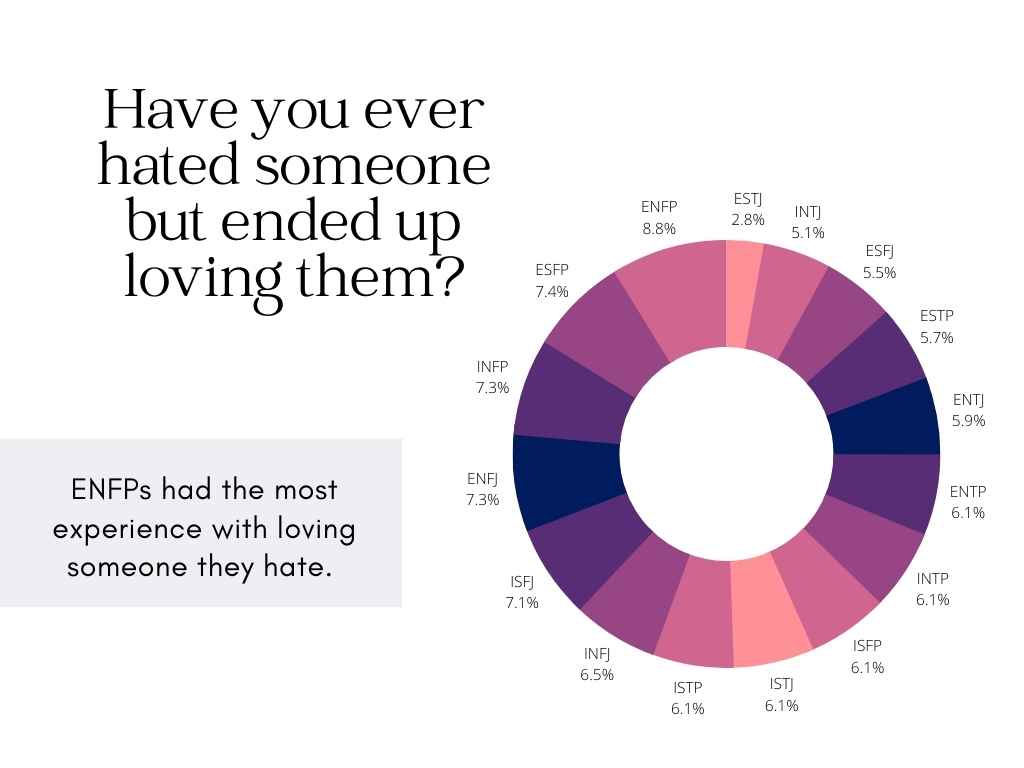
It’s a confusing and frustrating feeling to love someone you once hated. You might have said “I hate him but I want him” when you were going through a break up right? Whether it’s an ex you can’t get over or a family member that has always rubbed you the wrong way, loving someone you hate is a complicated emotion and experience.
On the one hand, you may feel like you’re betraying yourself by even allowing yourself to feel attracted to this person. After all, you spent so much time and energy hating them – how could you possibly love them now?
It seems like ESTJs with their strong convictions find it hard to love someone they once hated.
Read on and discover some of the studies that help make loving someone you hate possible – just in case.
Loving Someone You Hate
It’s complicated, loving someone you once hated. The feeling is intense and passionate, as though you’re trying to make up for all the anger and pain of the past. But it’s also scary because you know that this person has the power to hurt you like no one else can.
On the other hand, you may find yourself drawn to them in spite of yourself. Maybe they’ve changed since you last saw them, or maybe you’ve simply grown and evolved as a person. Regardless of the reasons, it’s important, to be honest with yourself about your feelings.
If you’re not sure whether your feelings are genuine, take some time to reflect on why you initially disliked this person.
What traits or behaviors bothered you then?
Have those things changed?
Or do you simply see them in a new light?
Only you can answer these questions, but being honest with yourself is an important first step in exploring your shifting feelings. If you decide that your feelings are genuine, then it’s time to take the next step and tell the object of your affections how you feel. This can be a daunting task, but it’s important to remember that everyone is capable of change. You may be surprised at how receptive they are to your newfound love.
There are many signs that your feelings may be shifting from hate to love. Perhaps you find yourself thinking about this person more often than you’d like to admit.
Maybe you find yourself getting annoyed with them for no reason, or perhaps you start making excuses for their bad behavior. If you’re feeling a strong emotional connection to someone you once hated, it’s possible that your feelings have changed.
It can be difficult to tell the difference between love and hate, but if you’re feeling confused or conflicted, it’s important to take some time to reflect on your feelings.
Signs of Shifting Feelings
So, you think you might be in love. It’s a scary feeling, especially if you’re coming from a place of hate. But there are definitely some signs that your feelings are changing. Here are some of them:
1. You find yourself thinking about this person all the time.
At first, you can’t stand being around them, but now you can’t get them out of your head. You find yourself making excuses to see or talk to them. You catch yourself staring at them when they’re not looking.
You start to feel a confusing mix of anger, frustration, and desire whenever you’re around them. You find yourself wanting to do things to make them happy, even if it means sacrificing your own happiness. Slowly but surely, you’re falling in love with your enemy.
2. You want to be around them as much as possible, and you’re always looking for ways to make them happy.
If you’re wondering whether your hate might be turning into love, there are definitely some signs to look out for. First and foremost, you’ll start wanting to be around the person more and more. You’ll find yourself seeking them out, wanting to make them happy and see them smile.
Additionally, your conversations will become more pleasant and easy-flowing; you’ll find yourself less likely to pick fights or say hurtful things. Furthermore, you’ll start seeing the best in them, even when they’re at their worst. If you’re noticing these things, it’s very possible that your hate is turning into love.
3. When they’re upset, it feels like your own happiness is at stake.
It’s not easy to tell when you’re falling out of hate and into love. The transition can be gradual, or it can happen suddenly. However, there are some definite signs that your feelings are shifting.
For example, when they’re upset, it feels like your own happiness is at stake. You feel upset too, even if you don’t know why. Additionally, you find yourself wanting to know everything about them, from their favorite color to their hopes and fears. You also start making excuses for their behavior, even when they’re in the wrong.
All of these changes can be confusing and scary, but they’re also a sign that your feelings are deepening. So if you’re wondering if you’re falling in love, pay attention to how you feel around the object of your affection. Chances are, your heart will give you the answer you’re looking for.
If you’re not careful, this love can consume you completely.
It’s a lot of pressure, but if you’re willing to take the leap, it could turn out to be the best decision of your life. So go ahead and take that chance. It just might be worth it.
The Truth in “The Deeper the Love, the Deeper the Hate”.
A psychological study sheds new light on the age-old question of whether love or hate is stronger.
Conclusion:
This study provides valuable insight into the complex nature of human emotions and underscores the importance of taking a nuanced approach to understanding our relationships with others.
The research shows that, contrary to popular belief, it is not necessarily hate that is the more powerful emotion. Instead, the strength of one’s feelings appears to be influenced by a variety of factors, including similarity and familiarity.
In the case of a person whom one loves or hates the most, it seems that love may still be dominant in the context of betrayal.
However, for someone with whom one has no personal connection, feelings of hatred are likely to be stronger than those of love.
This shows that when there is a sense of similarity or familiarity with a person (like a prior personal connection to intimacy) is vital in the dominant expression of love and hate. So the more that you know a person, the more it is likely that you will have dominant feelings of love for them.
So the adage, “the person you hate the most is the one you love the most” is a likely truth at the most.
Why do we hate the ones we love the most?
We hate the ones we love the most because we’re afraid of them. We’re afraid of how much they can hurt us.
Love and hate are two sides of the same coin. When we love someone, we open ourselves up to being hurt by them. And when that person hurts us, it’s especially painful because we love and trust them so much.
So we end up hating the people who have hurt us the most because it’s a way of protecting ourselves from getting hurt again. It’s a way of putting up a wall around our hearts to keep them from getting in again.
Is it true the more you love, the more you hate? Can loving someone make you hate them?
It’s not always that the more you love, the more you hate. What is true, however, is that the more you love someone, the more sensitive you become to any slight criticism from that person.
When you’re invested in a relationship – whether with a friend, family member, or romantic partner – you become much more attuned to their moods and behavior. When you care about someone, their well-being becomes important to you. And so when that person does something that doesn’t align with your views or expectations of them, it can cause a lot of upset and conflict.
The feeling of intense love can trigger powerful emotions, including fear, anger, and jealousy. When these intense emotions are triggered, they can sometimes cause us to behave in ways that we later regret or hurt the person we love.
It’s important to remember that these intense feelings are normal and usually pass over time. However, if you feel angry or resentful towards the person you love, it might be helpful to talk to a psychologist or therapist who can help you understand and manage your feelings.
Can you hate someone you love the most?
It is possible to hate someone you once loved. Perhaps you’ve been betrayed or hurt in some way. Or maybe the person has changed into someone you no longer recognize. Whatever the reason, it’s possible to feel intense hatred for someone you used to love.
However, it’s important to understand that this isn’t necessarily bad. In some cases, it may be necessary to let go of someone you love if they are no longer good for you. Feeling hatred toward them can signify that you are ready to move on.
Of course, there is such a thing as healthy hatred. It’s normal to feel angry or resentful towards someone you love as long as you find ways to resolve it.
How do you hate someone you love deeply?
Whatever the reason, it is important to remember that you are not obligated to continue loving someone if they no longer make you happy. Your happiness should be your top priority, and if someone is standing in the way of that, it is okay to walk away from them, even if it hurts.
It can be incredibly difficult to hate someone you love deeply. You may feel like you are betraying your own emotions by doing so. However, there are some reasons why people might come to hate someone they love. Maybe this person has hurt them deeply, or they have consistently failed to meet their expectations.
What is it called when you love someone you hate?
It’s called ambivalent love. Ambivalent love is a type of love characterized by strong feelings of both love and hate for the same person. People who experience ambivalent love often fluctuate between loving and hating their partner, sometimes even within the same day or conversation.
It’s an emotional roller coaster where the person alternates between loving and hating the other person. It’s a sign that there are unresolved issues and deep-seated anger or resentment that needs to be dealt with.
There’s a lot of research on this phenomenon, and it’s quite common. It’s usually explained in our early attachment experiences with our parents or primary caregivers.
If we had an ambivalent attachment with our parents, they were both loving and unavailable to us emotionally. This kind of inconsistency can be confusing and damaging for a child, and it often leads to ambivalent attachments in adulthood.
It makes sense that if we experience ambivalent attachments in childhood, we are more likely to experience them in our adult relationships. After all, we are attracted to people who are familiar to us, even if those people aren’t good for us.
What to do when you hate someone you used to love?
When you find yourself in a situation where you hate someone you used to love, it can be difficult to know how to handle it. The most important thing to remember is that your feelings are valid. It’s okay to feel angry, hurt, or betrayed by someone you used to care for. What’s important is how you choose to deal with those feelings.
One option is to try and forgive the person who hurt you. This can be difficult, but it can also be very freeing. Forgiving someone doesn’t mean forgetting what they did or excusing their behavior. It simply means letting go of the anger and resentment you’re holding onto. This can be a tough road to take, but ultimately it may be the best way to move forward.
Another option is to cut ties with the person entirely. This may be the best decision if the person continues to hurt you or if they are no longer a positive force in your life. If you choose this route, it’s important to be honest with yourself and ensure that you’re doing it for the right reasons.
There is no wrong or right answer when dealing with someone you hate. What’s important is that you listen to your heart and do what feels best for you.