
In today’s hyper-connected world, where consumers pull out their smartphones for everything from finding the nearest coffee shop to a reputable plumber, simply having a physical storefront or a basic website isn’t enough. For small local businesses, getting found online is not just an advantage—it’s a critical component of survival and growth. This is where SEO for small local
business comes into play, transforming how potential customers discover and engage with your establishment right in their neighborhood.
Why SEO is Non-Negotiable for Small Local Businesses Today
Many small business owners juggle countless responsibilities, making it tempting to overlook digital marketing. However, ignoring local SEO is like having a hidden gem and hoping people stumble upon it. In an increasingly digital landscape, hope isn’t a strategy.
The Evolving Local Search Landscape
Think about your own search habits. When you need something now, where do you turn? Google. The rise of “near me” searches has fundamentally changed consumer behavior. People aren’t just looking for a service; they’re looking for one conveniently located.
This trend is amplified by the increasing dominance of mobile and voice search local SEO, where queries like “Hey Google, find a pizza place near me” are commonplace. These shifts mean that if your business isn’t optimized for local search, you’re invisible to a significant portion of your potential customer base.
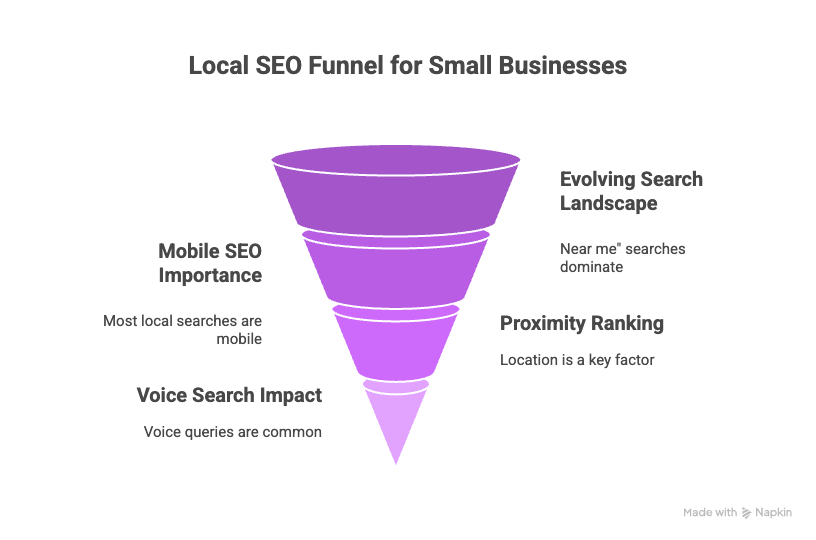
Mobile SEO for local businesses is particularly crucial, as most local searches originate from smartphones. The immediate proximity to the user often becomes a primary proximity ranking local search factor. Understanding what is local SEO for small businesses starts with acknowledging this profound shift in how consumers find and choose businesses.
Core Benefits of Local SEO for Small Local Businesses
Investing in a robust local SEO strategy for small businesses delivers tangible, powerful results that directly impact your bottom line:
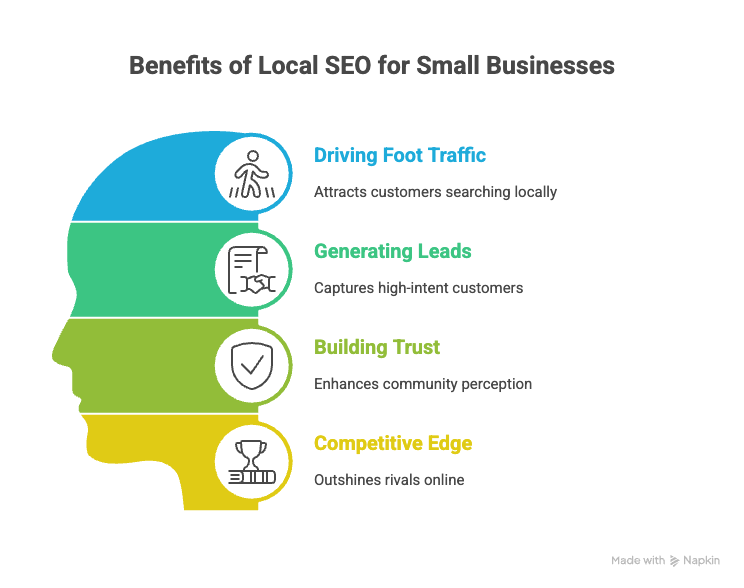
- Driving Qualified Foot Traffic and In-Store Visits: When someone searches for “plumber in [your city]” and finds your business at the top, they’re not just browsing; they have a need. This directly translates to get more local customers online and physical visits to your SEO for brick and mortar stores.
- Generating High-Quality Leads and Sales: Local searchers are often closer to a purchase decision. Appearing prominently in local search results means you’re capturing these high-intent leads, leading to better conversion rates and increased sales.
- Building Trust and Credibility within the Community: Businesses that rank well locally are perceived as more established, reliable, and trustworthy. Being easily discoverable online helps solidify your reputation and builds a strong local search visibility.
- Achieving a Competitive Edge Over Rivals: Businesses that rank well locally are perceived as more established, reliable, and trustworthy. Being easily discoverable online helps solidify your reputation and builds a strong local search visibility.
Foundational Local SEO Strategies for Small Local Businesses
Building a strong local SEO presence requires a solid foundation. These are the critical first steps for any small business SEO effort.
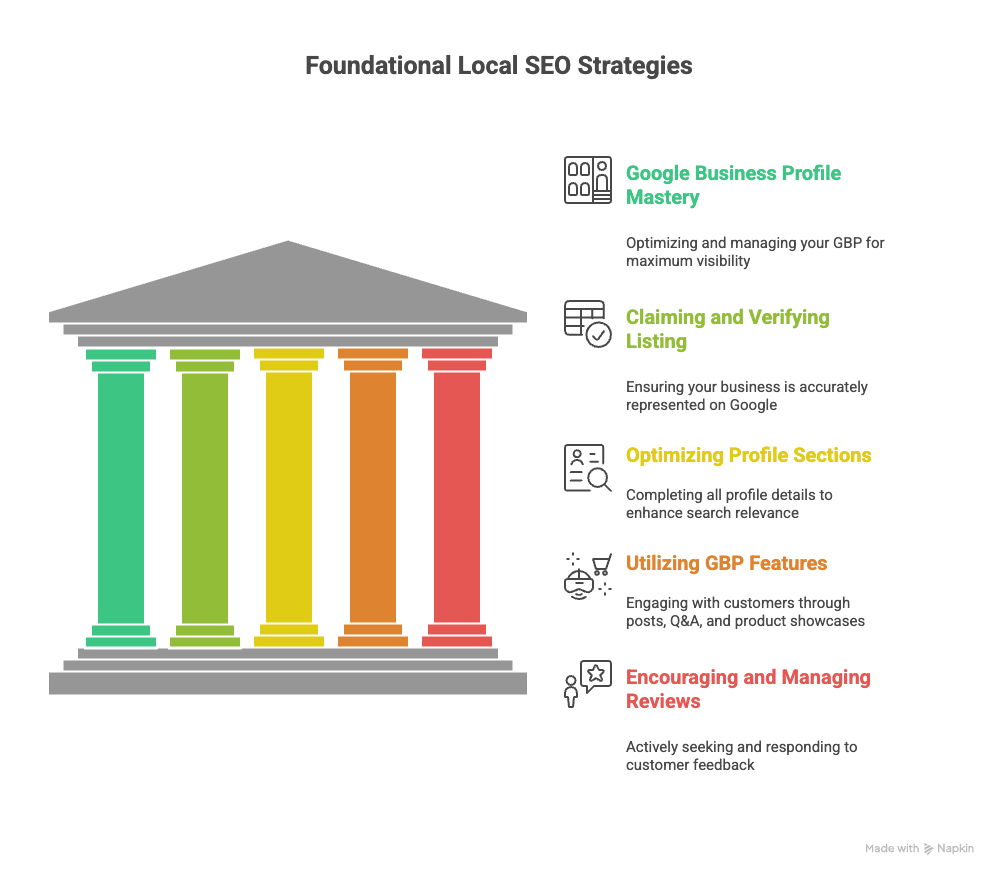
Mastering Your Google Business Profile (GBP)
Your Google Business Profile (GBP), formerly Google My Business, is arguably the single most important tool for local search engine optimization. It’s your digital storefront on Google Search and Maps.
- Claiming and Verifying Your Business Listing: This is step one. Ensure you claim your profile and complete the verification process, typically via postcard or phone.
- Optimizing All Profile Sections: Fill out every section completely and accurately. This includes precise business hours, services offered, a compelling business description, high-quality photos (interior, exterior, products, team), and a link to your website. This is key for Google Business Profile optimization.
- Utilizing GBP Posts, Q&A, and Product/Service Features: Treat your GBP like a mini-website. Regularly post updates about offers, events, or new products. Actively monitor and answer questions in the Q&A section, and showcase your services or products directly within your profile. Consistent optimizing Google Business Profile updates signal to Google that your business is active and relevant.
- Strategies for Encouraging and Managing Customer Reviews: Reviews are a massive Google Maps ranking factors. Actively encourage happy customers to leave reviews, make it easy for them (e.g., provide a direct link), and respond to all reviews, positive or negative, professionally and promptly.
Building Consistent Local Citations and Directory Listings
Citations are online mentions of your business’s Name, Address, and Phone number (NAP). Consistent NAP consistency SEO across the web helps Google confirm your business’s legitimacy and location.
- The Importance of NAP Consistency Across All Platforms: Any discrepancy in your business name, address, or phone number can confuse search engines and dilute your ranking potential. Ensure your local business digital marketing efforts align perfectly.
- Identifying Key Industry-Specific and General Directories: Beyond Google, aim for major directories like Yelp, Yellow Pages, Facebook, and industry-specific sites relevant to your niche. A local SEO checklist for startups should always include this.
- Auditing and Cleaning Up Inaccurate or Duplicate Listings: Over time, old or incorrect listings can appear. Use tools to audit your local citations building and correct any inaccuracies or remove duplicates. This tidies up your digital footprint and strengthens your local SEO.
Website Optimization for Local Search Success
Your website is your ultimate digital asset. It needs to be optimized not just for search engines, but specifically for local customers.
- Ensuring Mobile-Friendliness and Fast Loading Speeds: A slow or non-responsive website frustrates users and hurts your rankings. Google prioritizes mobile-friendly and fast sites, especially for local searchers on the go.
- Integrating Local Keywords Naturally: Research local keyword research terms that your target audience uses (e.g., “best bakery in [city name]”, “emergency plumber [zip code]”) and weave them naturally into your website content, headings, and meta tags. This is crucial for on-page SEO for local businesses.
- Creating Dedicated Local Landing Pages: If you serve multiple areas or offer distinct services, create specific landing pages for each. For instance, a cleaning service might have separate pages for “Office Cleaning [City A]” and “Residential Cleaning [City B]”.
- Displaying NAP Information Prominently: Your NAP should be clearly visible, ideally in the footer of every page and on your contact page. This helps drive local traffic to website and confirms your location to both users and search engines.
3. Advanced Tactics for Local SEO Growth
Once the foundational elements are in place, it’s time to elevate your affordable SEO for small business strategy with more advanced tactics.
Content Marketing with a Local Focus
Generic blog posts won’t cut it. Your content needs to resonate with your local audience.
- Blogging About Local News, Events, and Community Activities: Position your business as a community hub. Write about local festivals, charity events, or offer guides to local attractions. This hyperlocal SEO strategy connects your business to the community.
- Creating City-Specific Service Pages or “Best Of” Local Guides: Go beyond generic service pages. Offer “The Best Coffee Shops in [Your Neighborhood]” or “Guide to Dog Parks in [Your City]” if relevant to your business (e.g., a pet store or cafe).
- Developing Resources that Address Local Pain Points and Interests: What problems do local residents face that your business can help with? A local HVAC company could blog about “Preparing Your Home for [City’s] Winter” or “Common Allergy Triggers in [Region]”. * Showcasing Local Testimonials and Case Studies: Highlight the positive experiences of your local customers. This builds social proof and trust within your community.
Earning High-Quality Local Backlinks
Backlinks from reputable local sources signal authority to Google and significantly boost your small business SEO efforts.
- Partnering with Other Local Businesses: Collaborate on joint promotions, host events together, or simply exchange blog mentions and links.
- Sponsoring Local Events, Charities, or Community Groups: This not only generates positive PR but often results in a backlink from the event’s website or media coverage.
- Guest Posting on Local Blogs or News Websites: Offer to write an informative article for a local newspaper’s website, community blog, or even a local industry association’s site. This earns valuable links and exposure.
- Participating in Local Industry Associations: Membership often comes with a directory listing and a link back to your site, plus networking opportunities.
Harnessing the Power of Online Reviews
Online reviews for local businesses are gold. They influence purchase decisions and heavily impact your Google Maps ranking factors.
- Implementing Effective Strategies for Soliciting Genuine Customer Reviews: Make it part of your customer service process. Train staff to ask, send follow-up emails with direct links, or use QR codes at your location. Never buy reviews.
- Best Practices for Responding to Both Positive and Negative Feedback: Thank customers for positive reviews, reinforcing their choice. For negative reviews, respond promptly, empathetically, and offer to take the conversation offline to resolve issues. Your public response shows you care about customer satisfaction.
- Showcasing Reviews Prominently on Your Website and Social Media: Don’t just collect reviews; display them! Use testimonials on your homepage, service pages, and share them on social media to build trust.
4. Technical SEO Considerations for Local Discoverability
While the focus for local SEO is often on off-page and content, technical aspects of your website are vital for search engines to properly understand and rank your business.
Implementing Local Business Schema Markup
Schema markup is structured data that helps search engines understand the context of your website’s content. For local businesses, this is crucial.
- Adding Structured Data to Help Search Engines Understand Your Business Details: Using LocalBusiness schema markup (e.g., LocalBusiness, Organization) on your website clearly tells Google your business type, address, phone number, hours, and more.
- Utilizing LocalBusiness Schema for Rich Snippets in Search Results: Correct schema can enable rich snippets, such as star ratings or business hours, to appear directly in search results, making your listing stand out.
- Integrating AggregateRating Schema for Star Ratings: This specific schema helps Google display your aggregated customer review star rating directly under your search listing, significantly boosting click-through rates.
Optimizing Website Structure and User Experience (UX)
A well-structured website benefits both users and search engines.
- Ensuring Clear Navigation for Different Services or Locations: Users should easily find what they’re looking for. Clear menus, internal linking, and logical categorization are key.
- Creating an Intuitive User Journey for Local Customers: If a customer lands on your site from a local search, can they quickly find your address, phone number, or a way to book an appointment? Reduce friction.
- Prioritizing Core Web Vitals for Optimal Page Experience: Google’s Core Web Vitals (loading speed, interactivity, visual stability) are important ranking factors. A fast, stable website provides a better user experience, which Google rewards.
Website Security with HTTPS
- The Importance of an SSL Certificate for Trust and Search Engine Ranking Signals: Ensure your website uses HTTPS (Secure Sockets Layer). This encrypts data, making your site secure. Google considers HTTPS a minor ranking factor and users trust secure sites more, especially when sharing personal information.
5. Measuring, Monitoring, and Adapting Your Local SEO Strategy
Local SEO is not a set-it-and-forget-it endeavor. To maximize your results, you must continuously track performance and adapt your DIY local SEO guide.
Key Performance Indicators (KPIs) for Local SEO
Knowing what to track helps you understand what’s working and what isn’t.
- Tracking Google Business Profile Insights: Monitor views, calls, direction requests, and website clicks directly from your GBP. These metrics show direct engagement with your listing.
- Monitoring Website Traffic from Local Organic Searches: Use Google Analytics to segment traffic coming from local organic searches. This reveals how many local users are finding your website through non-paid search results.
- Analyzing Conversion Rates from Local Leads: Track how many calls, form submissions, or appointment bookings originate from your local SEO efforts. This determines the ROI of your strategy.
- Tracking Local Keyword Rankings and Visibility: Keep an eye on your performance for key
local keyword researchterms. Are you ranking in the top 3 for “[service] in [city]”?
Essential Tools for Local SEO Analysis
Fortunately, several tools can help you gather and analyze this data.
- Leveraging Google Analytics and Google Search Console: These free tools from Google are indispensable. Analytics provides detailed website traffic insights, while Search Console shows how your site performs in search results, including queries, impressions, and clicks.
- Utilizing GBP Insights for Direct Performance Data: Your Google Business Profile dashboard offers robust analytics specifically for your local listing.
- Exploring Local SEO Ranking Trackers and Citation Audit Tools: Tools like BrightLocal, SEMrush, Moz Local, or Whitespark can help monitor your local search visibility, track keyword rankings, and audit your local citations building for inaccuracies.
Continuous Optimization and Adaptation
The digital landscape is constantly evolving, and so should your local SEO strategy for small businesses.
- Regularly Updating Your GBP and Website Content: Keep your GBP profile fresh with new photos, posts, and accurate information. Regularly update your website content to keep it relevant and engaging.
- Staying Informed About Google Algorithm Updates and New Features: Google frequently updates its algorithms and introduces new GBP features. Staying informed ensures your strategy remains effective.
- Analyzing Competitor Strategies and Market Trends: See what your local competitors are doing well. Are they dominating certain keywords? Are they getting more reviews? Learn from their successes and adapt your own approach.
- Iterating on Your Strategy Based on Performance Data: Your KPIs are your compass. If certain tactics aren’t yielding results, don’t be afraid to adjust. Local SEO is an ongoing journey of testing, learning, and refining. It’s about providing lasting value to your community and ensuring your small business thrives in the digital age.
By embracing these strategies, small business SEO becomes an empowering tool, helping you connect with more local customers, build a stronger brand, and achieve sustainable growth.
